
Services

TECA Surgery in Pets

TECA Surgery in Pets is used to describe a procedure used to manage serious canal or middle ear disease in dogs where other methods of treatment have failed.

Expert VetsFull Service
Section 01

TECA Surgery in Pets

TECA Surgery in Pets – TECA Surgery in Pets (Total Ear Canal Ablation) refers to a radical and, at the same time, life-changing operation primarily used in dogs and, to a lesser extent, cats suffering from severe, end-stage ear disease. TECA is mostly the last line of dog care when chronic otitis externa has caused irreversible pain, scarring, and dysfunction of the ear canal. When medical management fails, a dog total ear canal ablation surgery has the diseased tissue entirely removed, thus rendering the dog pain-free and infection-free and dramatically changing the dog’s quality of life for the better. This article is aimed at pet owners and veterinarians who want to know: What are the indications for TECA? How does the surgery work? What are complications? Recovery and long-term results. Table of Contents
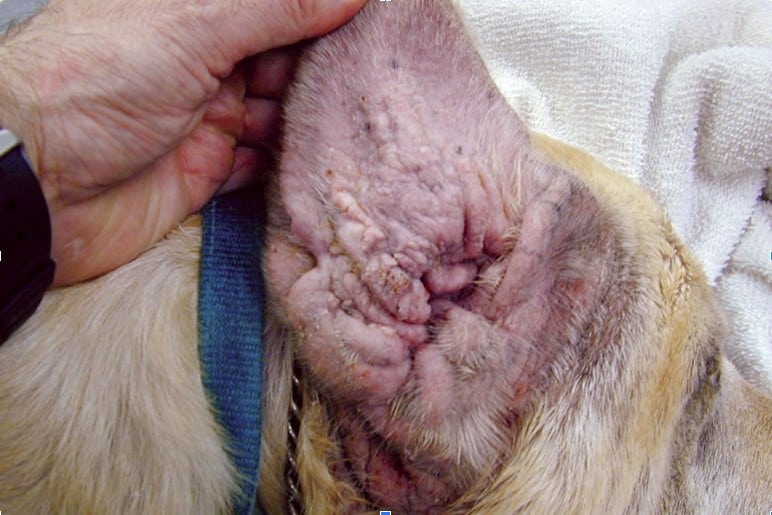
TECA Surgery in Pets - TECA Surgery in Pets
Section 02

What is TECA Surgery?

Total Ear Canal Ablation (TECA) consists of: After dog ear ablation surgery: TECA surgery in pets is driven by the animal’s pain and not by the inability of the pet to hear – most dogs that undergo a TECA surgery already have impaired hearing due to otitis externa before the operation.

  • Complete removal of the external ear canal
  • Mostly with Lateral Bulla Ostectomy (LBO) to get rid of the infected tissue from the middle ear
  • The ear opening is permanently closed
  • The dog no longer has an ear canal
  • Painful, infected tissue is completely removed
What is TECA Surgery? - TECA Surgery in Pets
Section 03

When Is TECA Surgery Needed?

Ear ablation for dogs is recommended for end-stage ear disease when medical therapy is no longer effective. Common Indications: Continued treatment at this point merely prolongs pain; dog total ear canal ablation offers permanent pain relief.

  • Chronic otitis externa or media that is unresponsive to treatment
  • Severely stenotic or mineralized ear canals
  • End-stage allergic ear disease
  • Recurrent ear infections resulting in chronic pain
  • Ear canal tumors
  • Ruptured or infected middle ear (bulla)
When Is TECA Surgery Needed? - TECA Surgery in Pets
Section 04

Which Pets Commonly Need TECA?

Dogs (Most Common) Cats (Less Common)

  • Cocker Spaniels
  • Bulldogs
  • Labradors & Golden Retrievers
  • Shar Pei
  • Dogs with severe allergies and chronic ear disease
  • Chronic otitis
  • Ear canal tumors
  • Severe inflammatory ear disease
Which Pets Commonly Need TECA? - TECA Surgery in Pets
Section 05

Signs a Pet May Need TECA Surgery

Inability to get the ears clean due to pain is a concern that must be discussed urgently in the case of TECA surgery in dog patients.

  • Constant head shaking
  • Chronic foul-smelling ear discharge
  • Crying or aggression when the ears are touched
  • Thickened, painful ear canals
  • Recurrent infections despite medication
  • Facial nerve weakness in advanced cases
Signs a Pet May Need TECA Surgery - TECA Surgery in Pets
Section 06

Pre-Surgical Evaluation

Typically, before dog TECA, the vets carry out: Proper planning leads to fewer problems and better results.

  • A complete ear assessment (usually under sedation)
  • CT scan or another type of advanced imaging of the middle ear
  • Culturing and sensitivity testing
  • Anesthesia safety blood work
  • Neurologic exam (facial nerve function)
Pre-Surgical Evaluation - TECA Surgery in Pets
Section 07

How TECA Surgery Is Done

Surgical Overview Dog ear ablation surgery generally takes 2-4 hours and should be done by a professional surgeon.

  • General anesthesia
  • Careful removal of the entire ear canal
  • Opening and cleaning of the middle ear (bulla osteotomy)
  • Removal of infected tissue and debris
  • Closure of the surgical site
How TECA Surgery Is Done - TECA Surgery in Pets
Section 08

Pain Management & Hospital Care

Even though TECA surgery in pets is a major operation, with the modern methods, pain is well controlled. Post-operative care consists of: The stay in the hospital is usually 2-5 days.

  • Multimodal pain control
  • IV fluids Antibiotics if indicated
  • Temporary drain placement
  • ICU monitoring may be required in some cases
Pain Management & Hospital Care - TECA Surgery in Pets
Section 09

Recovery After TECA Surgery

First 2 Weeks Recheck Visits The majority of dogs feel good within a few days after ear ablation for dogs.

  • Strict rest
  • Elizabethan collar
  • Check the incision for swelling or discharge
  • Give medications following the prescription
  • Drain removal
  • Suture or staple removal
  • Neurologic assessment
Recovery After TECA Surgery - TECA Surgery in Pets
Section 10

Will My Pet Be Deaf After TECA?

  • Quite a few dogs already have hearing loss before the dog TECA
  • Some hearing may be left if the inner ear remains intact
  • Pain relief is more important than hearing in dogs
  • Dogs very quickly learn to use their eyes and nose if required.
Will My Pet Be Deaf After TECA? - TECA Surgery in Pets
Section 11

Possible Complications (Uncommon)

With skilled surgeons, the complication rates after a dog total ear canal ablation (TECA) are minimal.

  • Temporary facial nerve paralysis
  • Temporary balance issues
  • Seroma or infection
  • Incomplete removal of the middle ear tissue
Possible Complications (Uncommon) - TECA Surgery in Pets
Section 12

Prognosis After TECA Surgery

The outlook is great if: Most owners witness their dogs being free from pain, coming out of hiding, and having a better quality of life. TECA surgery in dogs is often declared as “giving them their life back.”

  • The operation is done before the patient has serious neurologic damage.
  • The middle ear is treated thoroughly for the disease.
  • Post-operative care instructions are followed.
Prognosis After TECA Surgery - TECA Surgery in Pets
Section 13

What Happens If TECA Is Not Performed?

End-stage ear disease that is left untreated can result in: At this point, ear ablation for dogs is more humane than long-term medical therapy.

  • The patient is in pain all the time, suffering in silence.
  • The infection is spreading to the bone or brain.
  • Facial nerve paralysis;
  • Quality of life is severely diminished.
What Happens If TECA Is Not Performed? - TECA Surgery in Pets
Section 14

Conclusion

TECA surgery in pets should not be viewed as a last resort – it is a definitive and compassionate treatment for irreversible ear disease. Although it might seem like an extreme measure, a dog ear ablation removes the source of pain and infection, which means that the pet can live comfortably again. If your dog or cat has a painful ear condition that is resistant to medication, TECA surgery in dog patients may be the most compassionate treatment choice.

Conclusion - TECA Surgery in Pets